Tahoe is a macOS mis-step on par with Windows 8 or Windows Vista. If you’re from Apple and reading this, my feedback is pretty succinct: “I don’t recommend others upgrade. I wish I didn’t.”
Luckily for Apple, Windows 11 is not exactly in a position to attract switchers.
Let’s see if Apple can turn things around. iOS 8+ did improve on iOS 7’s worst bits.
I was hoping for a moment that this meant they had come up with a design that was safe against lethal trifecta / prompt injection attacks, maybe by running everything in a tight sandbox and shutting down any exfiltration vectors that could be used by a malicious prompt attack to steal data.
Sadly they haven't completely solved that yet. Instead their help page at https://support.claude.com/en/articles/13364135-using-cowork... tells users "Avoid granting access to local files with sensitive information, like financial documents" and "Monitor Claude for suspicious actions that may indicate prompt injection".
(I don't think it's fair to ask non-technical users to look out for "suspicious actions that may indicate prompt injection" personally!)
I don't understand the stance that AI currently is able to automate away non-trivial coding tasks. I've tried this consistently since GPT 3.5 came out, with every single SOTA model up to GPT 5.1 Codex Max and Opus 4.5. Every single time, I get something that works, yes, but then when I start self-reviewing the code, preparing to submit it to coworkers, I end up rewriting about 70% of the thing. So many important details are subpar about the AI solution, and many times fundamental architectural issues cripple any attempt at prompting my way out of it, even though I've been quite involved step-by-step through the whole prototyping phase.
I just have to conclude 1 of 2 things:
1) I'm not good at prompting, even though I am one of the earliest AI in coding adopters I know, and have been consistent for years. So I find this hard to accept.
2) Other people are just less picky than I am, or they have a less thorough review culture that lets subpar code slide more often.
I'm not sure what else I can take from the situation. For context, I work on a 15 year old Java Spring + React (with some old pages still in Thymeleaf) web application. There are many sub-services, two separate databases,and this application needs to also 2-way interface with customer hardware. So, not a simple project, but still. I can't imagine it's way more complicated than most enterprise/legacy projects...
Scott Adams died today. I want to acknowledge something complicated.
He always felt culturally like family to me. His peaks—the biting humor about corporate absurdity, the writing on systems thinking and compounding habits, the clarity about the gap between what organizations say and what they do—unquestionably made me healthier, happier, and wealthier. If you worked in tech in the 90s and 2000s, Dilbert was a shared language for everything broken about corporate life.
His views, always unapologetic, became more strident over time and pushed everyone away. That also felt like family.
You don’t choose family, and you don’t get to edit out the parts that shaped you before you understood what was happening. The racism and the provocations were always there, maybe, just quieter. The 2023 comments that ended Dilbert’s newspaper run were unambiguous.
For Scott, like family, I’m a better person for the contribution. I hope I can represent the good things: the humor, the clarity of thought, the compounding good habits with health and money. I can avoid the ugliness—the racism, the grievance, the need to be right at any cost.
Taking inventory is harder than eulogizing or denouncing. But it’s more honest.
Last time I flew Delta they no longer had this bot, which made me sad. One of my favorite parts of flying was getting absolutely crushed into a tiny cube by the airplane seat's easy chess bot, and then again by the airplane seat itself when the person in front of me reclines their seat.
It's so important to remember that unlike code which can be reverted - most file system and application operations cannot.
There's no sandboxing snapshot in revision history, rollbacks, or anything.
I expect to see many stories from parents, non-technical colleagues, and students who irreparably ruined their computer.
Edit: most comments are focused on pointing out that version control & file system snapshot exists: that's wonderful, but Claude Cowork does not use it.
For those of us who have built real systems at low levels I think the alarm bells go off seeing a tool like this - particularly one targeted at non-technical users
I swear, this reign of visual artists as dictators has to stop.
I'm sure people noticed this issue internally and brought it up but some thing by some designer was seen as biblically sacred and overruled all reason.
I've been at companies were you get severely punished... sometimes fired for subordination for fixing an obviously broken spec by a designer emperor.
It's normal to be "I guess 2+2=5 here, whatever" as if the designer went in a tiny room, had a seance with the divine...
Yo, newsflash, everyone makes mistakes. Failure is when you force them to stay uncorrected.
One of the most annoying things after installing Tahoe for me, that for no good reason an ordinary app would randomly lose its focus. In the midst of my typing. This is unbelievably preposterous and I just can't stop hating Apple for this crap. How the fuck this is acceptable? I just have no words. What makes it even worse that I couldn't even complain about it on their support pages - they just keep removing my comments for being "non-constructive". This is some random bug, and many people have complained about it, how am I suppose to make it "more constructive"? Send them the exact configuration of constellations, the number of monitors I use and their positioning angles, log the keyboard rate and delay, the latency, the level of magnetic interference caused by my Bluetooth devices, etc.?
They did not. Anthropic is protecting its huge asset: the Claude Code value chain, which has proven itself to be a winner among devs (me included, after trying everything under the sun in 2025). If anything, Anthropic's mistake is that they are incapable of monetizing their great models in the chat market, where ChatGPT reigns: ie. Anthropic did not invest in image generation, Google did and Gemini has a shot at the market now.
Apparently nobody gets the Anthropic move: they are only good at coding and that's a very thin layer. Opencode and other tools are game for collecting inputs and outputs that can later be used to train their own models - not necessarily being done now, but they could - Cursor did it. Also Opencode makes it all easily swappable, just eval something by popping another API key and let's see if Codex or GLM can replicate the CC solution. Oh, it does! So let's cancel Claude and save big bucks!
Even though CC the agent supports external providers (via the ANTHROPIC_BASE_URL env var), they are working hard on making it impossible for other models to support their every increasing agent feature set (skills, teleport and remote sessions, LSP, Chrome integration, etc). The move totally makes sense, like it or not.
If nothing else, this was likely driven by Google being the most stable of the AI labs. Gemini is objectively a good model (whether it's #1 or #5 in ranking aside) so Apple can confidently deliver a good (enough) product. Also for Apple, they know their provider has ridiculously deep pockets, a good understanding and infrastructure in place for large enterprises, and a fairly diversified revenue stream.
Going with Anthropic or OpenAI, despite on the surface having that clean Apple smell and feel, carries a lot of risk Apple's part. Both companies are far underwater, liable to take risks, and liable to drown if they even fall a bit behind.
The entire arc of Scott Adams is a cautionary tale.
To go from a brilliant satirist to becoming terminally online and just completely falling off the far right cliffs of insanity is incredibly sad. And unfortunately, this is plight is not uncommon. It is incredibly dangerous to make politics part of your identity and then just absolutely bathe yourself in a political media echo chamber.
Would be interesting to train a cutting edge model with a cut off date of say 1900 and then prompt it about QM and relativity with some added context.
If the model comes up with anything even remotely correct it would be quite a strong evidence that LLMs are a path to something bigger if not then I think it is time to go back to the drawing board.
It's $12.99/mo or $129/yr for a subscription that includes Final Cut Pro, Logic Pro, Pixelmator Pro, Motion, Compressor, MainStage, Keynote, Pages, and Numbers
Educational discount with verification required drops the price to $2.99/mo / $29.99/yr.
The regular-price subscription includes family sharing, education price does not.
One-time purchase versions remain available: Final Cut Pro ($299.99), Logic Pro ($199.99), Pixelmator Pro ($49.99), Motion ($49.99), Compressor ($49.99), and MainStage ($29.99).
> Modern TVs are very poorly suited for kids. They require using complicated remotes or mobile phones, and navigating apps that continually try to lure you into watching something else than you intended to.
I'd argue that's not too different for grown-ups. ;)
The writing was on the wall the moment Apple stopped trying to buy their way into the server-side training game like what three years ago?
Apple has the best edge inference silicon in the world (neural engine), but they have effectively zero presence in a training datacenter. They simply do not have the TPU pods or the H100 clusters to train a frontier model like Gemini 2.5 or 3.0 from scratch without burning 10 years of cash flow.
To me, this deal is about the bill of materials for intelligence. Apple admitted that the cost of training SOTA models is a capex heavy-lift they don't want to own. Seems like they are pivoting to becoming the premium "last mile" delivery network for someone else's intelligence. Am I missing the elephant in the room?
It's a smart move. Let Google burn the gigawatts training the trillion parameter model. Apple will just optimize the quantization and run the distilled version on the private cloud compute nodes. I'm oversimplifying but this effectively turns the iPhone into a dumb terminal for Google's brain, wrapped in Apple's privacy theater.
This article lists several of the absurdities of the Date constructor, but only barely touches on the most unforgivable one. The example from the article is:
  // Unless, of course, you separate the year, month, and date with hyphens.
  // Then it gets the _day_ wrong.
  console.log( new Date('2026-01-02') );
  // Result: Date Thu Jan 01 2026 19:00:00 GMT-0500 (Eastern Standard Time)
In this example, the day is "wrong" because the constructor input is being interpreted as midnight UTC on January 2nd, and at that instantaneous point in time, it is 7pm on January 1st in Eastern Standard Time (which is the author's local time zone).
What's actually happening here is a comedy of errors. JavaScript is interpreting that particular string format ("YYYY-MM-DD") as an ISO 8601 date-only form. ISO 8601 specifies that if no time zone designator is provided, the time is assumed to be in local time. The ES5 spec authors intended to match ISO 8601 behavior, but somehow accidentally changed this to 'The value of an absent time zone offset is “Z”' (UTC).
Years later, they had realized their mistakes, and attempted to correct it in ES2015. And you can probably predict what happened. When browsers shipped the correct behavior, they got too many reports about websites which were relying on the previous incorrect behavior. So it got completely rolled back, sacrificed to the altar of "web compatibility."
For more info, see the "Broken Parser" section towards the bottom of this article:
> In my friend circle in Germany I don't even know one single person on this stuff.
Most people don’t announce when they’re taking a new medication.
GLP-1 drugs are popular in Germany, too. Not quite to the level of some other countries but a quick search shows about 1 in 12 individuals in Germany.
Note that the US number quoted above was for households not individuals, so the numbers of households in Germany with at least one member on a GLP-1 is higher. This isn’t a uniquely American phenomenon, despite attempts to turn this into another America-bad comment thread.
> It's insane to me that so many people need these to get off the processed foods killing them in the US.
GLP-1 drugs don’t make people stop eating processed food. They reduce food intake and cravings. It’s still up to the user to make healthy choices about what to eat.
Also it’s been about a decade since I visited family friends in Germany but there was plenty of processed food to be had when I was there, too.
The US drift into Adam Curtis' broad thesis in hypernormalisation(a) continues apace I see. Great to see J Pow putting up a fight but I fear this is all going one way.
(a) >We live in a world where the powerful deceive us. We know they lie. They know we know they lie. They don't care. We say we care but do nothing.
Spent about 2 years improving printing and scanning stack of Linux: CUPS, SANE, AirSane, as well as some legacy drivers, and also x86 proprietary driver emulation on ARM with Box86.
Even that "modern" printing stack in Linux is 20+ years old, there's still such an unbelievable amount of basic bugs and low-hanging-fruit optimizations, that it's kinda sad.
Not to mention that it still maintains ALL its legacy compatibility, as in supporting ≈5 different driver architectures, 4 user-selectable rasterizers (each with its own bugs and quirks).
The whole printing stack is supported by 4 people, 2 of whom are doing that since the inception of CUPS in 1999. Scanning is maintained by a single person.
Ubuntu 26.04 LTS is expected to be the last version with CUPS v2. CUPS v3 drops current printer driver architecture and introduces proper modern driverless printing with the wrapper for older drivers. Many open-source drivers are already use this wrapper, but expect a huge disarrangement from the users, as none of the proprietary drivers would work out of the box anymore.
This posts lists inexpensive home servers, Tailscale and Claude Code as the big unlocks.
I actually think Tailscale may be an even bigger deal here than sysadmin help from Claude Code at al.
The biggest reason I had not to run a home server was security: I'm worried that I might fall behind on updates and end up compromised.
Tailscale dramatically reduces this risk, because I can so easily configure it so my own devices can talk to my home server from anywhere in the world without the risk of exposing any ports on it directly to the internet.
Being able to hit my home server directly from my iPhone via a tailnet no matter where in the world my iPhone might be is really cool.
Hi, Felix from the team here, this is my product - let us know what you think. We're on purpose releasing this very early, we expect to rapidly iterate on it.
(We're also battling an unrelated Opus 4.5 inference incident right now, so you might not see Cowork in your client right away.)
I loved Dilbert, having worked for more than one Dilbert-like company the humor frequently resonated with me.
How or why Scott Adams went completely of the rails is perhaps something we'll sadly never understand. Was this opinions he'd always had, but suppressed, did he somehow become radicalized or was it perhaps medically induced, e.g. a stroke or something. It was incredibly sad to see him throw away his life's work and go down a path most of us at least hadn't foreseen and die having alienated his fans.
TBH, it all feels like a huge gamble at this point. Neither skills, education, institutional ties, nor current employment can guarantee a stable foundation for life.
This hits harder depending on how much money, social capital, or debt you accumulated before this volatility began. If you’ve paid off your debts, bought a house, and stabilized your family life, you’re gambling with how comfortable the coming years will be. If you’re a fresh grad with student debt, no house, and no social network, you’re more or less gambling with your life.
I’ve come back to the idea LLMs are super search engines. If you ask it a narrow, specific question, with one answer, you may well get the answer. For the “non-trivial” questions, there always will be multiple answers, and you’ll get from the LLM all of these depending on the precise words you use to prompt it. You won’t get the best answer, and in a complex scenario requiring highly recursive cross-checks— some answers you get won’t be functional.
It’s not readily apparent at first blush the LLM is doing this, giving all the answers. And, for a novice who doesn’t know the options, or an expert who can scan a list of options quickly and steer the LLM, it’s incredibly useful. But giving all the answers without strong guidance on non-trivial architectural points— entropy. LLMs churning independently quickly devolve into entropy.


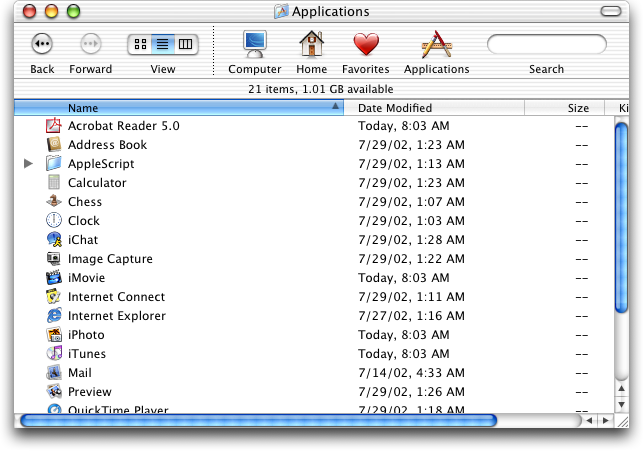

Luckily for Apple, Windows 11 is not exactly in a position to attract switchers.
Let’s see if Apple can turn things around. iOS 8+ did improve on iOS 7’s worst bits.